

Your home is likely the biggest financial investment you will ever make in your life. To protect that investment, you rely entirely on your roof. This system acts as a shield, taking a constant beating from blistering summer sun, heavy downpours, freezing winter ice, and howling winds. Most of the time, your roof does its job so quietly that you completely forget it is there. However, structural wear and tear happen slowly over time, and a roof system can begin to fail long before you ever see water dripping into your living room.
Many homeowners fall into the dangerous trap of ignoring their roofs until a major storm causes a sudden interior disaster. By waiting for an active ceiling leak to show up, you risk dealing with major structural damage, ruined attic insulation, and toxic mold outbreaks inside your walls. The secret to avoiding thousands of dollars in emergency home remediation costs is knowing how to spot the early warning signs of a failing roof. You do not need to climb onto a tall, dangerous ladder to check the health of your system. Instead, you can gather a massive amount of information by looking for specific physical clues from the safety of the ground and inside your attic. This comprehensive guide will teach you exactly how to inspect your roof like a pro, helping you spot critical weak points early so you can keep your home safe, dry, and secure.
Scan the Ground: Spotting Granules and Missing Shingles After Storms
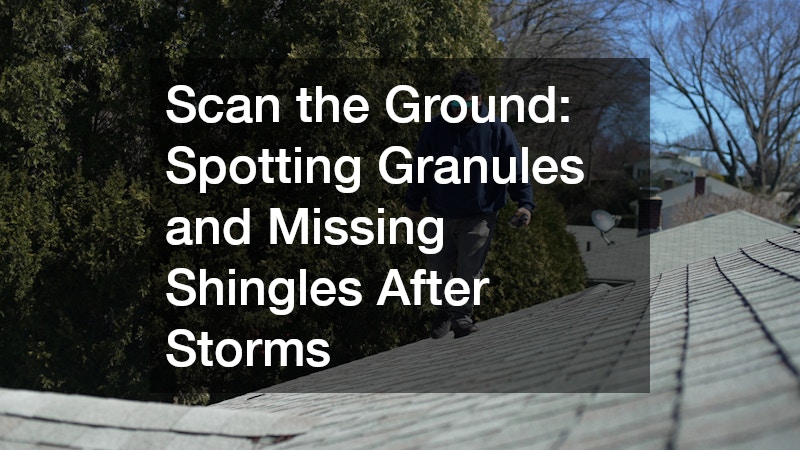
You can learn a tremendous amount about the condition of your roof without ever leaving the ground. After a heavy downpour or a high-wind storm, your first step should be to walk outside and check your gutter downspouts. Look closely at the ground where the rainwater exits the pipes. If you see large piles of dark, sand-like debris, your shingles are actively shedding their protective composite granules. These granules are not just for decoration; they are the primary shield that protects the underlying asphalt mat from destructive ultraviolet rays. When a roof loses too many granules, the asphalt dries out, cracks, and loses its ability to shed water. If you notice your gutters are constantly filling up with this dark sand, it means your shingles are nearing the end of their life, and scheduling a timely roof repair is necessary to keep your home protected.
Beyond checking for granules, you should regularly walk the entire perimeter of your yard to hunt for dislodged or broken building materials. High winds can easily catch the edges of weakened shingles, snapping off individual tabs or tearing whole sections away from the wooden roof deck. If you find pieces of asphalt shingles, broken plastic vents, or bent metal strips scattered across your lawn after a storm, your roof has immediate entry points where rainwater can pour directly into your home. While you might be tempted to patch these areas yourself, temporary fixes on an aging surface are rarely a permanent solution. For older properties facing widespread storm damage, investing in comprehensive residential roofing services is the safest way to restore the physical integrity of your exterior shell before the next big storm arrives.
- Check your gutter downspouts regularly for heavy accumulations of dark, sand-like shingle granules.
- Look for bare, shiny, or dark spots on your shingles from the ground, which indicate total granule loss.
- Walk your yard after strong winds to collect any torn shingle tabs or broken pieces of metal flashing.
- Understand that missing shingles leave your wooden roof decking completely exposed to immediate water rot.
Inspect the Attic: Tracking Down Water Stains and Structural Sagging
When you suspect your roof is failing, your attic is the best place to find absolute proof. Grab a high-powered flashlight and head upstairs during a heavy afternoon rainstorm. Turn off the flashlight for a moment and look up at the ceiling. If you see tiny pinpricks of daylight peeking through the roof boards, you have direct holes that water will inevitably find. Turn your flashlight back on and carefully examine the underside of the wooden roof decking and the vertical rafters. Look for active dark water rings, damp wood, or white, powdery mold growth. Keep in mind that water is sneaky; it often enters through a breach high up near the ridge of the roof, travels down the slope of the wood, and finally drops onto your ceiling several feet away from the actual leak source.
While you are inspecting your attic, you must also look closely at the physical alignment of the structural support beams. A healthy roof should have straight, rigid lines that show no signs of warping or bending. If you notice that the horizontal ridge beam or the flat plywood decking sheets look curved, dipped, or sagging downward, you are facing a major structural emergency. This sagging happens when long-term, hidden water leaks saturate the wood, causing it to soften and buckle under the heavy weight of the exterior shingles. Once the structural timber begins to sag, a simple patch job will no longer fix the issue. At this point, you need a professional roof installer to evaluate the framing and structural damage. Hiring an experienced roofing contractor immediately is critical to preventing a catastrophic partial roof collapse that could destroy your upper living spaces.
- Inspect your attic ceiling during a bright day with the lights off to check for visible holes or pinpricks of sunlight.
- Use a strong flashlight to scan the rafters for dark water rings, damp patches, or active white mold.
- Follow the path of any damp wood upward to trace a hidden leak back to its true point of origin on the exterior.
- Look for any dipping, curving, or sagging in the plywood decking sheets, which indicates structural wood softening.
Analyze Surface Wear: Checking for Curled Edges and Moss Growth
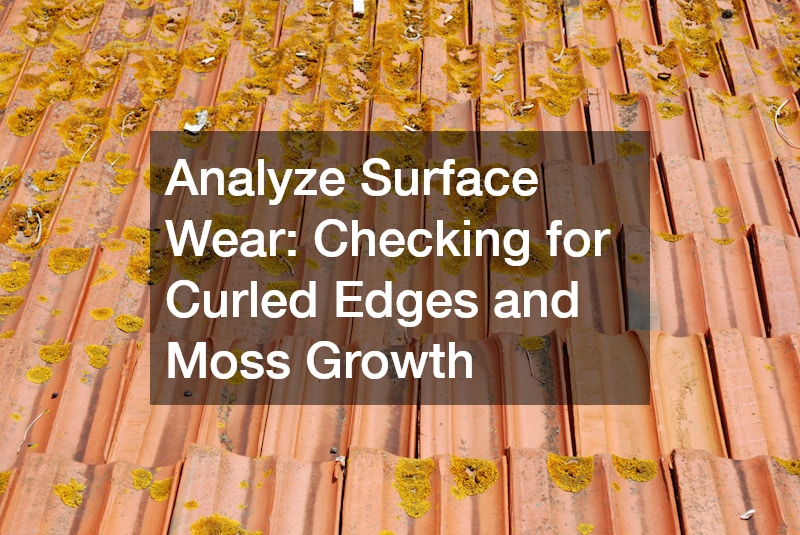
If you want to evaluate the overall health of your roof from the safety of the ground, grab a pair of binoculars and step across the street from your house. Take a close look at the lower edges of your shingles. In a healthy system, every shingle should lie perfectly flat against the one beneath it. If you notice that the corners of the shingles are cupping upward or the outer edges are curling outward like a claw, the material is failing. This curling happens as shingles age and dry out from decades of sun exposure. Once a shingle distorts and curls, it becomes incredibly brittle. The next strong gust of wind can easily snap the shingle completely off, leaving your home vulnerable to severe water damage. When a large percentage of your roof shows widespread curling and buckling, a simple repair will not solve the problem, and planning for a new roof install is the most responsible choice you can make.
Another serious surface threat to look for is the growth of thick green moss, algae, or lichen patches on your roof slopes. While some homeowners think a bit of green moss looks charming and rustic, it is actually a silent killer for roofing materials. Moss acts like a dense, heavy sponge that traps moisture directly against the shingles for weeks at a time. This constant dampness prevents the roof from drying out naturally after a rainfall, causing the underlying asphalt and wood structure to rot away prematurely. Furthermore, as moss grows, its tiny roots lift the edges of the shingles up, allowing wind-driven rain to blow underneath them. If your roof has reached the point where large sections are covered in moss and the shingles are warped, it is time to look into complete roof replacements to permanently secure your home.
- Use binoculars to inspect the lower edges of your shingles for signs of cupping, clawing, or lifting.
- Understand that curled shingles are completely brittle and can no longer protect your home from wind-driven rain.
- Look for thick patches of green moss or lichen, which hold destructive moisture against the roof surface.
- Check the installation date of your roof, keeping in mind that standard asphalt shingles rarely last past twenty years.
Monitor Exterior Details: Examining Damaged Flashing and Sagging Rooflines
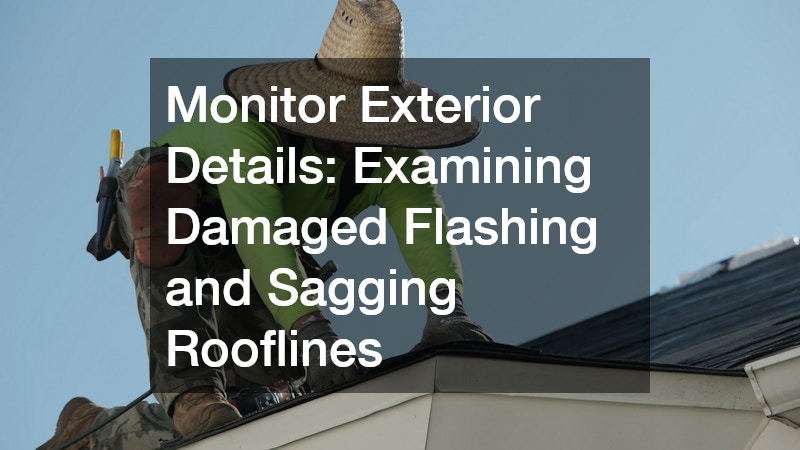
A complete roof system relies on many different components working together seamlessly, not just the shingles. One of the most critical parts of this system is the flashing. Flashing consists of thin sheets of metal installed around roof penetrations, such as your chimney, ventilation pipes, and skylights. Its only job is to seal the gaps where the roof meets a vertical surface. Over time, the caulking around this metal can dry out and crack, or the metal itself can rust through completely. If the flashing around your chimney separates or rusts, rainwater will slide right down the brickwork and pour straight into your living room walls. During your ground inspection, make sure all metal trim is securely fastened and flush against the roof surface.
Next, take a few steps back from your property and look at the overall shape of your house. Pay close attention to the main ridge line, which is the absolute highest horizontal peak where the two sides of your roof meet. In a well-built, structurally sound home, this ridge line should be completely straight and level. If you step back and notice that the ridge line looks wavy, bowed, or has a distinct dip in the middle, your home is sending you a loud warning signal. A sagging roofline usually means the internal load-bearing walls or rafters have been severely weakened by decades of hidden water intrusion. Fixing a sagging structure requires heavy construction and expert knowledge. Whether you choose a traditional style or want to hire a specialized metal roofer for a modern material upgrade, addressing a wavy roofline requires a professional roof installation to rebuild the structural core of your home safely.
- Examine the metal flashing around chimneys and vents to ensure it is not rusted, bent, or pulling away.
- Remember that cracked caulking around skylights is one of the most common causes of sudden interior water leaks.
- Look at the highest horizontal peak of your house from a distance to ensure the line is perfectly straight.
- Recognize that a wavy or dipping ridge line is a clear sign of serious structural damage that requires professional attention.
Compare Your Options: Vet Providers and Modern Materials Wisely

Once you identify the warning signs that your roof needs a major upgrade, your final step is to find the right team to handle the project. A full roof replacement is a major construction undertaking, and you should never rush into hiring the first business that knocks on your door after a storm. Take the time to research and interview multiple local roof companies before signing a contract. Always verify that a business holds a current, valid state license and carries comprehensive liability and workers’ compensation insurance. This insurance protects you financially if a worker gets injured on your property or if an unexpected accident damages your home during the tear-off process.
When you are comparing estimates, look closely at the specific materials and warranties being offered. A quality project should include a solid manufacturer’s warranty on the shingles themselves, as well as a separate workmanship warranty from the company doing the installation. Do not be afraid to ask detailed questions about modern material upgrades, such as impact-resistant architectural shingles or energy-efficient metal panels that can lower your monthly heating and cooling bills. Taking the time to consult with a reputable residential roofer will ensure you choose the exact material and ventilation system that fits your budget and local climate. Investing in a professional upgrade will give you complete peace of mind, knowing your family will stay warm and dry through many decades of stormy weather.
- Verify that any contractor you interview holds a valid state license and complete liability insurance.
- Request written estimates that clearly break down the cost of material, tear-off, disposal, and new installation labor.
- Compare workmanship warranties to ensure the business stands behind the quality of their physical labor.
- Ask about modern, high-performance materials that can lower your home insurance premiums and energy bills.
Conclusion
Your roof is the most important protective barrier keeping your home, your family, and your personal belongings safe from the elements. While it can be easy to ignore your roof when the weather is clear, keeping a close eye on the subtle warning signs of material failure is the best way to prevent an expensive housing emergency. By making it a regular habit to check your yard for stray granules, scan your shingles for curled edges, and inspect your attic space for hidden water stains, you can catch critical damage long before it ruins your ceilings.
Never ignore the warning signs of a sagging roofline or brittle, aging shingles. When your home shows clear signs of deep material wear, taking proactive steps to upgrade your system is the smartest financial decision you can make. Grab a strong flashlight and take ten minutes to check your attic ceiling this weekend. Staying ahead of potential problems today ensures your home stays completely dry, secure, and beautiful for many years to come.